Reviewing the Merry Christmas Retro Card PNG for Embroidery
As a designer who has spent countless hours digitizing and stitching out holiday motifs, I approach every new asset with a critical eye. We are not just looking for pretty pictures; we are looking for structural integrity, stitchability, and market appeal. When I first loaded the Merry Christmas Retro Card PNG into my workflow, my immediate thought was not about how it looked on a screen, but how it would translate to fabric. This is a crucial distinction for any serious embroidery project.
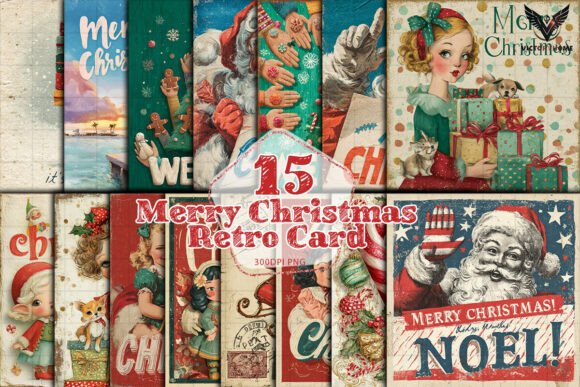
The visual personality of this piece is undeniably nostalgic. It captures that mid-century modern holiday vibe—clean lines, bold shapes, and a sense of whimsical charm that feels both vintage and fresh. For those of us in the craft business, especially Etsy sellers and small shop owners, this aesthetic is currently performing very well. It moves away from the overly complex, dense traditional Christmas scenes and leans into graphic simplicity. But does that simplicity hold up under the needle? Let’s break it down from a practical, real-world perspective.
First Impressions and Design Layout
The layout of the Merry Christmas Retro Card PNG is balanced. It does not suffer from the common pitfall of having elements that are too close together, which can cause thread breaks or puckering. The spacing between the graphical elements suggests a design that breathes. In embroidery terms, this usually translates to better stability on the hoop. The theme is clear, and the detail level is moderate. It is not so intricate that it requires microscopic precision, nor is it so vague that it loses its character when scaled down.
For an embroidery designer, this is a promising starting point. However, remember that a PNG is a raster image. It is not a native embroidery file like DST or PES. This means you will need to digitize it or use auto-digitizing software with caution. The clean lines suggest it would respond well to satin stitch borders and fill stitch interiors, but the transition areas need careful attention to ensure smooth coverage without excessive jump stitches.
Real-World Application: The Holiday Tote Scenario
To truly evaluate this design, I imagined a specific client request: a set of custom reusable tote bags for a local boutique’s holiday promotion. The client wanted something eye-catching but durable. I visualized placing the Merry Christmas Retro Card PNG on a heavy canvas tote. The bold, retro style complements the sturdy texture of canvas beautifully. Unlike delicate script fonts that can get lost in the weave of coarse fabric, the solid shapes in this illustration stand out.
In this scenario, the design acts as a focal point. I would recommend using a cut-away stabilizer to support the weight of the stitches, ensuring the bag doesn’t distort after repeated washing. The visual appeal here is high because the retro aesthetic feels intentional and curated, rather than generic. Customers are more likely to trust a handmade product that looks professionally designed. This design lends itself to that perception of quality.
Versatility Across Products
Beyond tote bags, where else does this fit? I see strong potential in several areas:
- Sweatshirt Embroidery: Placed on the left chest or as a larger back print, the retro vibe pairs perfectly with heather grey or forest green fleece. The fill stitch areas will provide a nice tactile contrast against the soft fabric.
- Embroidered Patches: Because the design has defined edges, it would make an excellent iron-on or sew-on patch. You could use a satin stitch border to encase the raw edges, creating a durable accessory for jackets or hats.
- Kitchen Towels and Aprons: For holiday hosting gifts, this design adds a cheerful touch to linen or cotton twill. Just be mindful of stitch density; you do not want the towel to become stiff.
- Baby Embroidery: Softened color palettes of this retro card could work on organic cotton onesies. However, you must reduce the size significantly and ensure no small, loose threads remain for safety.
Technical Considerations and Caution Areas
While the design is strong, there are areas where you must proceed with care. If you are working with stretchy fabric, such as jersey knits for t-shirts, the horizontal elements of the retro card might cause pulling if the stabilizer is not sufficient. Always test on scrap fabric first. I cannot stress this enough. What looks perfect on your monitor may behave differently on a curved surface like a cap or a thin, slippery synthetic blend.
Another consideration is the hoop size. If you are using a small 4x4 inch hoop, you may need to simplify the design or split it into two parts. Crowding the details into a tiny space will result in a muddy finished product where the individual elements merge into a blob of thread. Check your stitch density settings during digitization. High density on a lightweight fabric will cause puckering, ruining the professional look of your handmade product.
Also, consider the thread colors. Retro designs often rely on specific color contrasts to pop. Do not assume standard red and green will work best. Try mustard yellows, teal blues, or burnt oranges to enhance the vintage feel. Test your thread color combinations on both light and dark fabric backgrounds. A design that shines on white cotton might disappear on navy fleece if the contrast is not adjusted.
Commercial Value and Brand Consistency
For commercial embroidery projects, consistency is key. Using assets like the Merry Christmas Retro Card PNG can help build a recognizable brand style. If your shop specializes in mid-century modern home decor, this design fits seamlessly into your existing catalog. It enhances buyer engagement because it feels cohesive and thoughtful.
However, before selling finished items or digital products derived from this image, you must confirm the licensing terms. Just because it is a PNG does not mean it is free for commercial use. Check the source where you acquired the Illustrations. Ensure you have the right to use it for physical goods and, if applicable, for printable mockups or digital embroidery files. Protecting your business from copyright issues is just as important as the quality of your stitching.
Final Designer Notes
Before you commit to a full production run, take these practical steps:
- Digitize with Care: If converting from PNG, manually adjust stitch angles to follow the shape of the design elements. Auto-digitizing often misses the nuance of retro graphics.
- Check Small Details: Zoom in on the corners and tiny lettering. If any element is thinner than 2mm, consider widening it or removing it to prevent thread breaks.
- Mockup Testing: Create black and white mockups to check value contrast. If the design loses its definition in grayscale, it may lack the necessary contrast for embroidery.
- Stabilizer Selection: Match your stabilizer to your fabric. Use tear-away for stable wovens and cut-away for stretchy knits or items that will be washed frequently.
The Merry Christmas Retro Card PNG is a versatile asset for the right project. It offers a stylish, nostalgic appeal that resonates with current market trends. By respecting the technical limitations of embroidery and applying careful digitization practices, you can transform this digital illustration into a high-value finished product. Whether you are decorating custom apparel, creating holiday gifts, or stocking your small shop with unique merchandise, this design has the potential to perform well. Just remember: the success of the final product lies not just in the image itself, but in how thoughtfully you execute the stitch.